How I got started with DBtune (& why we chose Postgres) with Luigi Nardi
Download MP3CLAIRE: 00:00:05
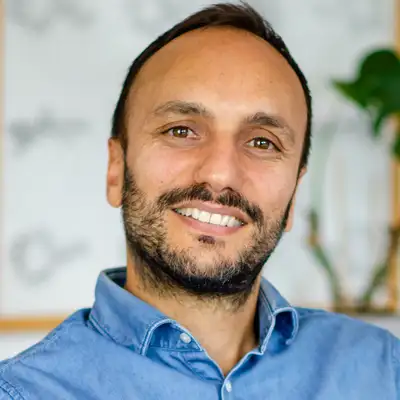
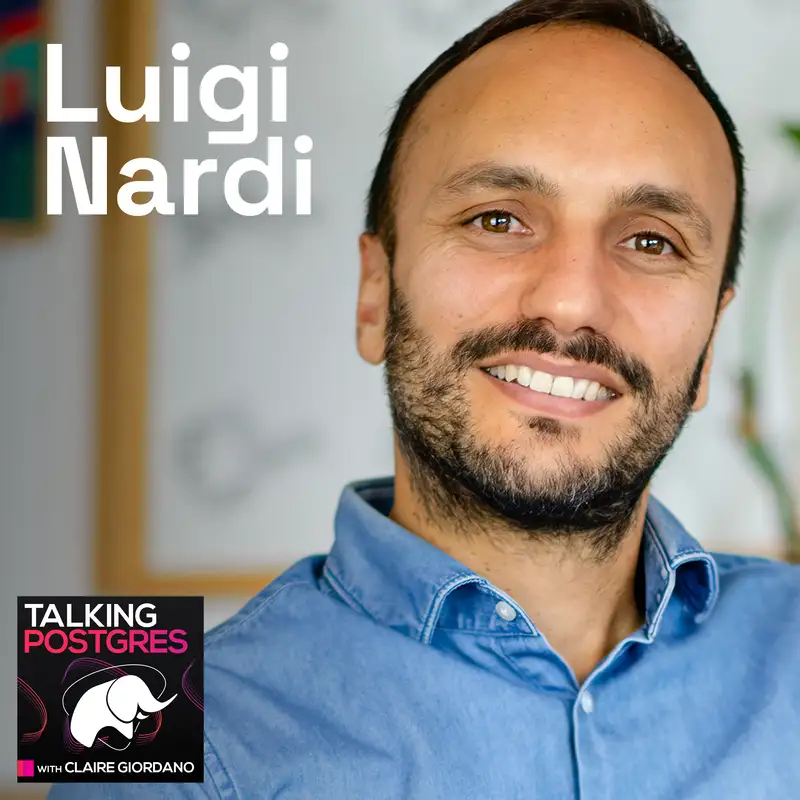
Welcome to Talking Postgres, a monthly podcast for developers who love this database. I'm your host, Claire Giordano, and in this podcast, we explore the human side of Postgres, databases, and open source, which means we talk a lot about why do people who work with Postgres do what they do and how did they get there? I want to say thank you to the team at Microsoft for sponsoring today's conversation. And today's guest is Luigi Nardi. Luigi is founder and CEO of a Postgres database startup called DBtune, which was founded in 2020, I believe. And it's focused on automated database tuning for Postgres. Luigi has worked in computer systems for over 15 years. He has a PhD in computer science from Pierre and Marie Curie University in Paris. He did his postdoc at Imperial College London, research at Stanford University, and has been a professor in AI at Lund University in Sweden. So you can see that Luigi has lived in many different countries. He's published a lot of peer-reviewed papers in both machine learning and computer science, I think about 50 or so. And with that, I want to say welcome to you, Luigi.
LUIGI: 00:01:23
Thank you for having me, Claire. It's great to be here.
CLAIRE: 00:01:25
Let's just dive in to today's topic. The title for today's episode is how I got started with DBtune and why we chose Postgres. And where the I in that case is not me, but it's you, Luigi. And I'd love to just start with your, your origin story. How did you get started? Okay, I was going to talk about database tuning, but let's just back up. How did you get started as a developer and in computer science?
LUIGI: 00:02:01
Right, so we're really going back in time. I had a Commodore 64 at home when I was a little boy, and my older brother was already coding when I kind of came online and remember playing a lot of games on Commodore 64. When I was 14 years old, I went to high school and I back then already decided to take a direction that was computers and computer science. So I started learning about computer science in school when I was 14 and I did it for about five years. The first language that I learned was Pascal and then C in school. And I was very passionate about the algorithmic aspect of this. So I would sometimes write programs on paper as well, just to see it all coming together from an algorithmic perspective and then sometimes implement them as well and run them. So that was kind of really the beginning of my experience with computers. I had friends that were assembling computers back then, and I found that also fascinating. Participated to a couple of things like that. But, yeah.
CLAIRE: 00:03:36
And then from there, how did you get involved in machine learning and database tuning?
LUIGI: 00:03:44
So yeah, after that I went to I went to school studied computer engineering and then computer science, afterwards the computer engineering had a lot of math classes and I was pretty passionate about that part. And when I started working as a PhD student, I really liked the combination of math and computer science programming. And so back then, I was developing a new programming language and the compiler was written in C and embedding the language in C. And this was for physicists that were interested in writing numerical models, meaning things that will predict the ocean or the weather forecast or the climate. And sorry for all the physicists that are hearing me here right now, but physicists are not the best at writing code. And so we wanted to help them with a programming language with a high level of abstraction to basically capture this law of physics so that then they could generate, we could generate from the compiler level, automatically generate the code. And by having this approach, they will get plenty of really interesting things for free, like parallelism, for example. They didn't have to write parallel code, for example, and it could infer quite a lot of things, like, for example, the backpropagation, basically, of this model. So we could calculate gradients, at least partially calculate gradients that were useful for the calibration of the models. So yeah, really the idea of building a programming language and a compiler for people that were really interested in the law of physics mainly, but then they wanted to see all this numerical equations mapped down to the computer and the hardware in a way that you can exploit the hardware in the best way, in an efficient way with parallelism and locality terms of memory usage and so on. And so that was my first experience with models, calibration of models, modeling, but also really hardcore computer science. I feel like compiler research is one of the hardest topics in computer science. And it was all very experimental back then and domain specific languages back then were kind of a new topic. I mean, there were, there were domain-specific languages already available, but it was kind of an interesting, exciting new topic. I think back then, we're talking about 2006, 2007.
CLAIRE: 00:06:39
And remind me, this is all happening in Paris?
LUIGI: 00:06:45
That's correct. And my French was getting built back then. So I went to France without really speaking any French, and learned.
CLAIRE: 00:06:55
How could you do that? How could you... and were your classes in French? Did your...
LUIGI: 00:07:01
So the class, yeah, it was pretty much all in French. I mean, the colleagues would speak English and that was quite useful, but most of it was in French to the point that my PhD thesis actually was also in French. I wanted to write in English, but for some reason, you know, my advisors weren't really on board with that. And so eventually I had to write a formal PhD thesis in French, which was a big experience, a bit painful for me, but also that made it such that not many people have read my thesis because, of course, it would be interesting reading about domain-specific languages and compilers and numerical models in French. I mean, there is certainly a market for that that is probably 10 people, or 20 maybe.
CLAIRE: 00:07:57
Well, I imagine that you wrote your thesis after you had been in the PhD program for several years. Am I right about that? And so presumably your French got a little bit better than when you first got to Paris.
LUIGI: 00:08:11
That's true. That's true, absolutely. So it was a few years in and I was very lucky to have at the lab really people that were really kind and helpful. So I remember giving a chapter to, you know, anyone that wanted to really help me. I will give a chapter to them and then they will get back to me with notes on the chapters and I will then iterate with them and get it right. It wasn't a one iteration type of thing. You know, you need to kind of iterate a couple of times, But people have been really, really kind and useful and sorry, helpful on that. And that really helped.
CLAIRE: 00:08:58
I think that one of the first times that I spent a lot of time talking to you was actually in Paris. There's a wonderful one-day Postgres conference that happens every year in the spring in Paris, France, called pgDay Paris, kind of an obvious name. And it's a sister event to Nordic PGDay, which usually happens in one of the Nordic countries two days before. So a lot of people go to both, right? They might fly from Copenhagen to Paris or Oslo to Paris, depending on where Nordic is. anyway and so I saw you at Nordic but then pgDay Paris there was this great speaker and organizer I guess dinner after the conference and you were one of about 10 people I think who after that event ended who kind of helped lead a walk around Paris pointing out different jazz clubs and architecture and building. And anyway, I have fond memories of that day.
LUIGI: 00:10:07
I have really fond memories as well of that event. I think that's really where, I think for the first time, we connected a little more and talked a little more, you and I. We met before that, but that day was very nice, walking in the streets of Paris and having a glass of wine in, you know, in the cafes of Paris. That was, that was all fun.
CLAIRE: 00:10:29
Yeah I think it was all that there was a lot of really good beer in some of those cafes too. Okay. But let's stay focused. I still want to get to database tuning, jump ahead from your PhD program toward, and maybe you're taking me there and I'm just impatient. But after your PhD, there's so many things you could have done with that education. How in the world did you end up founding a Postgres database startup that's focused on tuning?
LUIGI: 00:11:06
Yeah, after my PhD program, I was a little tired of academia. So I worked as a software engineer for a few years again in Paris. Then after that, after about three years, I actually decided to go back to academia and keep doing research in a university. So moved to London. After that, I moved to Palo Alto. And in all this university kind of endeavors, I was really interested in working at the intersection between machine learning and computer systems. And this is a field now that is called MLSys, machine learning and systems. It can go in the two directions, machine learning that helps improve computer systems, but it can also go in the other direction, which is basically building systems for machine learning. And I was always more interested in the first one, using machine learning to improve systems. I think that the other direction is also really, really interesting, and I'm glad that there are so many people working on that, all the projects like TensorFlow and PyTorch and Torch and PyTorch. And those are all the other direction, right? But I was fundamentally interested in exploring this idea of using probabilistic models, Bayesian methods, all sorts of modeling for, with the purpose of improving computer systems. And I'm using computer systems in a slightly loose and general way here. During these projects, I started applying this type of machine learning techniques to a number of different systems. Computer vision, for example, we're interested in making this optimization of computer vision systems through machine learning. That was back in London at Imperial College. And then when I moved to California, I started working more on the use of this machine learning techniques for hardware design and compiler optimization. So the decision-making process that it's made through the machine learning models to generate better code or better hardware. We published some really interesting papers in that space. And at some point I just realized that this technology was really getting ready for prime time. It was just working across the board, right? So no matter what application you would throw at it, it would do something useful for that domain.
CLAIRE: 00:13:45
And what year? What year are we talking about now?
LUIGI: 00:13:47
This was when I started thinking about the commercialization of that was 2018. [Okay.] So really the idea of getting the last, you know, maybe five, six, seven years of research and try to package that into something that can be useful. And then when I started wondering, what is the, you know, the application that will make sense for this, a problem setting that really makes sense for this type of technology, also from a slightly commercial perspective. And I knew databases from school. I, of course, took my databases classes probably a decade earlier, used databases here and there for projects. And when I was in the Bay, I had the chance to meet a few people, two engineers from Microsoft, for example, that were really, really interested in tuning Postgres. And then I gave a talk at VMware. And again, there, there were people really interested in tuning databases and met folks at Teradata, gave a talk there. And all these companies were really connected with the university. And I was able, it was easy for me to just go and drop there and give a talk and receive all this sort of feedback. And eventually the database tuning seemed to be like a topic that came up over and over again. And the, you know, I started working on that by myself, but one year later, I ended up meeting Daniel Gustafsson first. And after that, Daniel...
CLAIRE: 00:15:37
I am a big Daniel Gustafsson fan. And I have to point out that he's a Postgres committer, has been involved in the open source project for a long time. And he has been...
LUIGI: 00:15:49
It was in the show as well, right? It was in your show as well.
CLAIRE: 00:15:52
Exactly. He's been a guest on this podcast.
LUIGI: 00:15:56
Yeah, I think Daniel has been really a force of nature for us because he, You know, it never worked directly with me and us, but it just really made some really good connections. And it just gave us some really good advice as well. The moment in time where we really needed some really good advice. And Daniel introduced me to Magnus Hagander. And we work with Magnus since then. So Magnus and I go back to 2019, if I remember correctly. We started talking about this problem setting and he, of course, is one of the, you know, in my head, Magnus is, you know, the tuning guru, right? That's how I would describe him. He has been tuning Postgres for a couple of decades and, you know, he really knows that problem really, really well. And so I, you know, the combination of his deep expertise in Postgres and my expertise on the automation and machine learning side of that, autonomous tuning part that's really what got DBtune up up and running so we started having regular meetings and then started started with a small prototype and then this became a much bigger project over the years.
CLAIRE: 00:17:24
Now Magnus for anybody who's listening and doesn't know who he is, he's also a Postgres committer, which is often called the maintainer in other open source projects. He's part of the Postgres core team, which sometimes might be called a steering committee in other projects, and based in Sweden. Well, like Daniel, they're both based in Sweden. So, wow, that's interesting. I didn't realize that connecting with Daniel and then Magnus had an influence on the early days of the company.
LUIGI: 00:17:56
Yeah, at that time, I also transitioned to a professorship in AI at Lund University. So I was connected to Sweden at that point, 2019. [Oh.] And there is a very interesting rule in Swedish universities, which is that professors have the professor privilege. And the professor privilege means that you can work on a research topic at the university. And after, you know, and you can decide to exploit the IP that you create at any time without, you know, no questions asked. And that was very useful for me because in 2019, this was really just a prototype and ideas that we were trying to make it work. It took a few more years to really make this really solid and ready for prime time to run in production systems and so on. So that was very helpful. The university was really helping us to also to raise some grants. And we received grants from the university and from the public institutions in Sweden. That was our way to bootstrap the whole thing. And since this deep tech projects usually take a few years, that was really, really useful for us. And then when we were ready to incorporate a company, that was pretty easy because of the professor privilege. There was nothing to do pretty much in terms of, you know, some universities, they have technology offices and then you need to go back and forth with them for a long time before being able to create a company out of the IP coming from your research, academic research. But in my case, it was, yeah, that was basically a scratch that entirely, right? So that was really straightforward to then incorporate a company and get going.
CLAIRE: 00:19:53
It's really interesting. Well, I just think it's incredibly valuable for users of Postgres and frankly, a lot of databases, just what is now happening with machine learning and AI. If I wind back in time to like 2017, I just remember empathizing with customers who, if they needed help tuning their database and they didn't have that expertise in-house, then they had to, you know, reach out to people at outside consultancies or other companies, maybe vendors whose applications they were going to try. They had to schedule a meeting. They couldn't just fix the thing right now, which is generally what they wanted. They had to work with someone. And of course, the answer was always, it depends, initially. And it just took all this time. And I was like, why can't we take... There are these experts in the world, like you said, these tuning gurus. Why can't we get all of the thought processes that are in their brains and apply it so that people can solve their problems faster? And I kind of feel like that's what's happening. Or that's certainly your intention, I take it.
LUIGI: 00:21:10
Absolutely. I think there is not just my intention. I think the whole industry is really moving in that direction. I think you attended the Postgres events like I do. I meet you all the time at these conferences and you very often see these topics being debated in terms of a panel or, you know, talks, invited talks and so on. So there is certainly a lot of momentum in this type of topics at the moment. In practice, we see some solutions that are really available and can be used, including in production systems. And I think that's really, really exciting. It's a big shift in the industry. And yeah, I'm really, really excited to see how this shapes up in the next couple of years.
CLAIRE: 00:22:00
Very cool. Yeah, I think you were on a panel at PGConf India last year in March. And I was at that conference, but I missed the panel. So I don't know if there's any takeaways or kind of quotes or anything that you walked away with from that conversation that's worth sharing with the audience. I'm kind of putting you on the spot here.
LUIGI: 00:22:29
So the panel was, I think it's also recorded online. So maybe you can drop it in the notes of the show.
CLAIRE: 00:22:35
In the show notes. [Yes.] Cool.
LUIGI: 00:22:38
There was a panel related. So the topic itself was Postgres and AI. There were experts like Bruce for example, [Bruce Momjian?], yes, Tom Kincaid and Dennis as well. they were all there and a few other, you know, I would say, deep thinkers about this topic. So it was very, very interesting. I think everybody had to contribute with some sort of insight to the discussion. And, you know, the fact that the audience, sorry, the panelists were a pretty diverse set of people that created this kind of really interesting takes from each one of them. There was, again, a lot of the discussion was in both directions of basically a pgvector type of discussions where we want to enable the next generation of AI applications through Postgres. That was certainly a big topic. And I think the Postgres community has been pretty responsive on this, right? Trying to, you know, pgvector was an extension that was already available when the big new AI wave arrived. And people have improved that and worked on that and made it really available for this type of usage. And I think that's certainly very good for the future of Postgres, let's say, right? And then there was as well some discussions in this category of making Postgres good for AI applications in this category here. There were discussions, for example, on how to use GPUs, hardware accelerators of sorts to make this AI applications run better, including with Postgres to some form and shape and form. So that was, I think, something that I actually saw after a few months, some projects that were coming out in that direction. So I think that was interesting to see that. I don't know if it was really coming because of that panel discussion, of course, but it seems that the industry was already perhaps moving in that direction. We saw some of that happening just after a few months. And then there was the other category that I described at the beginning, which is using AI and machine learning to make Postgres better. So some discussions were also in that direction. And of course, it's all about, you know, this idea of self-driving databases. And I really like the performance side of this, but autonomous tuning is a part of that. It's part of that bigger vision. The bigger vision is self-driving databases. And I think we are seeing already a lot happening in the last few years. If you just think, for example, about the cloud providers and all the database as service, the various ones. I think that's also a part of that story of self-driving databases, even if it's still, I wouldn't say basic, but it doesn't do everything for you. It does certain things, backups and high availability and point-in-time recovery. Those are all things that these days you can just buy a service from one of the providers and you will get all those things. And that in some sense is already going in the direction of self-driving databases because you don't need to think about backups anymore, for example, right? Because that's just happening. And the self-driving databases, of course, is a much broader area than what we have today with the database as a service. And certainly the performance tuning side of things is kind of missing from this database as a service. But we are seeing some of the cloud providers that are getting there, mainly in the form, and this was debated as well in the panel, mainly in the form of recommendations, which is if you think about the level of autonomy, like in self-driving cars, for example, recommendations will be, we'll say level three or level four. So we're not going all the way up to level five where you have this full autonomous systems with these recommendations. And that's what I'm actually really, really excited about, the level five thing. So everything we do at DBtune is really level five at this time. So everything is fully autonomous, but we don't, of course, cover everything that needs to be done. So the next few years will be really interesting to achieve this broader spectrum of things that we can do at that level five for autonomous tuning and self-driving databases.
CLAIRE: 00:27:40
Okay. So I guess we could spend the rest of the conversation talking about self-driving databases and what does that mean? But there's part of me that really wants to delve into how does one go from doing research, even at a university like Lund University, which has this great program that enables you to use your IP and go create a company. But how do you go from doing research to creating a startup? Like, it's risky to create a startup, you know? There's no guarantees. Sometimes all the stock that you make available to yourself and to investors and employees turns into literal wallpaper that you can put on your bathroom wall. So how did you, what prompted that? Did you always know you wanted to start a company?
LUIGI: 00:28:39
So that started a few years earlier. I saw friends at Imperial College that created companies. When I was in San Francisco, I co-habitated an apartment with a couple of startup founders. And my father was an entrepreneur. So he graduated from college. And as soon as he graduated from college, he created this company. And he worked in this company for 40 years. This wasn't really a startup as we mean it with venture capital and all that kind of stuff. But he was very passionate. He created a lot of electronic devices. He was an electrical engineer by training and he created a lot of devices for factories and measuring temperature or moving a bunch of powder from one place to the other place and measuring very accurately the weight of that powder, for example. All these kind of projects that were borderline robotics type of projects, but also instrumentation type of projects, and he created them from scratch. I thought it was really influential for me to see that you can not just start a company, but also create a new thing and put it [Create something from nothing.] in the world from nothing, from scratch, and from the design on a piece of paper actually implementing it and the implementation for him was the hardware side but there was also the software side and and it was really fascinating and for me when I then saw that the technology that we were working on at the university was working on various applications it didn't really take me very much to you know go do it in industry and in the real world because I just had all this influence that made me pretty comfortable with this idea. And perhaps if I think back now, that was a little crazy, but at the moment it didn't feel that crazy just because it has always been in the air for me, both with my family and with some colleagues in the past and friends in the past.
CLAIRE: 00:30:58
Okay, so you were around from an early age with your dad, and then even while you were at Imperial College London and at Stanford, you were socializing with or living with as roommates people who were starting companies and who were founders, and so you were just exposed to it in every direction, it sounds like.
LUIGI: 00:31:19
Yeah and then you know those those friends will have you know a bunch of books that they will recommend you to read and you slowly start to read and learn you know there are some magazines that there will be you know on the table and you pick it up and read a bunch of things and eventually you just get really familiar with that idea and you, by osmosis, with the environment you just learn a bunch and then when it's time you just do it.
CLAIRE: 00:31:49
Got it. You just go for it. Has your family been supportive of this, of taking these kinds of risks? Is it normal for them as well?
LUIGI: 00:31:58
Yeah, my family has been always very supportive, not just for this one thing. I never heard my parents telling me that I shouldn't do something. [Okay.] And that was really a trait of my education. So when I decided to do this, of course, I was a little older. So they would have never said anything against it, I think, but they've always been really supportive of this. They're very excited, always asking, you know, all sorts of questions and they want to know how is it going, and yeah, very supportive overall.
CLAIRE: 00:32:40
Well that, I don't know, is it corny to say that's a blessing? I mean not everybody has that, so that's kind of wonderful.
LUIGI: 00:32:51
I totally agree with you.
CLAIRE: 00:32:55
Okay, so you had all this exposure to people starting companies and then of course Lund University I think it sounds like their policy and maybe it's a Swedish policy, not just specific to that university, but across higher education in Sweden, that enabled you to go do that. It sounds like you bootstrapped DBtune. Is that right?
LUIGI: 00:33:21
Yeah, we bootstrapped for about three years, I would say. A long time. And I think that, that time was, you know, we could have done it faster. But I think that time was kind of needed because when you're working on something that is really unexplored and really new, you just need to try a bunch of things first and explore and talk to some people, get ideas and over time getting into something more concrete. And I think what made this also take some time is that our ambition was really this level five type of automation and doing it in production. I think the production aspect was something that we never wanted to do it otherwise. We wanted to optimize production systems. We wanted to see this to be deployed in the largest, most complex enterprise workloads and environments and that piece I think is of course really really challenging because you of course need to do it really carefully and safely as well.
CLAIRE: 00:34:26
Right. Yeah. You don't want the autonomous agents, if you will, to be deleting tables, for example. So, which I'm sure they don't. [That won't be good news no.] Yeah. I'm curious. Okay, well, first of all, how big is DBtune? How many people right now? I'm sure it's growing. I'm sure you're hiring. Are you hiring?
LUIGI: 00:34:55
We're always looking for people to come implement this vision with us and collaborate with us. So yes, we're always hiring. We're 15 people right now so the team is still fairly small, mainly engineers. So we have structured the company with these three divisions. We have the product division and we have the research division and we have the go-to-market division. The go-to-market division is really, really small. We've been doing a lot of really interesting engineering over time and we have created a research team which is literally a third of the company. So we're really investing really, really heavily in research. And the idea is that the research that has been done in the team then gets passed along to the product team. And then there are questions about usability, production, and an implementation that gets taken from, you know, explored by the product team. So, the way everybody is collaborating on this is really dynamic and interesting in many ways, I think.
CLAIRE: 00:36:07
Okay. By the way, for anyone listening, this isn't an ad for DBtune. I'm just really curious. And that's why I asked about the hiring question. I had no idea if you were 15 people or 30 by now. So it's 15 people. What is the culture like, if you can describe it? And do you feel like the culture what's it a reflection of? Where did it come from? How is it different than other places you've worked?
LUIGI: 00:36:39
Yeah, so we are a deep tech startup with roots in Silicon Valley and an European flavor. So the roots, I think, are really present in the way we structure things and we think about things. But we're still an European company, so you also feel the European vibes, perhaps, if that's understood. We specialize in machine learning, AI optimization, databases, and cloud computing. And all these different topics of course it's not just one person but it's the interaction of a team so really the team is what makes the work that we do it's really about the team and less about the individuals everyone has some really interesting expertise in a specific topic, but it's all together that really works well. So the culture is then really, really important, in my opinion, to create that type of, you know, moving from a group of people to a team. It's certainly a difficult process and it needs to be really intentional as well. And so I would say that the culture, our culture is a blend of academic rigor and a fairly, I would say, agile mindset and execution. We have an innovation first mentality. We give a lot of autonomy and ownership to every single individual to the point that sometimes, if we don't have in-house specific expertise, people are very happy to just pick that one up and try to just make it work, right? So they will learn and they will make it happen, right? And that's the attitude that we see, not being afraid of something new and just trying to learn and execute. We try to have a lot of transparency and a flat hierarchy as well. And trust, I think that those are the key points as well, part of our culture.
CLAIRE: 00:38:55
Is everybody in the same timezone or are you distributed globally so that people might be 12 hours apart from each other? I'm just curious. I work for a very large organization. And of course the Postgres open source project, people are spread all over the world, and so I'm always curious about time zones.
LUIGI: 00:39:10
Yeah, and perhaps you can also tell us about your experience working in a startup like Citus, right?
CLAIRE: 00:39:20
Yeah. So, well, first are you all in the same time zone for the most part right now? Obviously subject to change.
LUIGI: 00:39:26
We are mostly in the same city or a couple of cities around in southern Sweden, close to Copenhagen, Malmö, Copenhagen, that's the region, very, very south of Sweden, right? Almost in the continent, let's say. But we have a few individuals that are abroad, including in very different time zones. We have a person in Colombia and a few people in Central Europe as well. And yeah, so we certainly need to make it work in a slightly remote setting. But we have also quite a lot of face time. And the fact that most of the people are in the same region, it's pretty convenient because we can have some really good regular face time. And the people that are not in that region, they fly and join for sometimes even a few weeks, a few weeks in a row to create those ties and create that feeling of a team. And again, not a bunch of groups that are working together, but the team, right? They morphing a group into a team. That's super important, I think.
CLAIRE: 00:40:39
Okay, so I don't want to ignore your question about what it was like for me to work at a Postgres startup, which I did from 2017 to 2019 called Citus Data, which got acquired by Microsoft, which is how I ended up where I am now. But I do want to ignore it for a little while at least because there's something I'm really, really curious about. For many, not all at this point, but for a lot of developers, their workflows are changing as they figure out how to use coding assistance to help them be more productive and more efficient. And, you know, you'll hear some developers complain about AI slop, right, when they look at the work of others and stuff that's coming out of these AI coding assistants and they think it's just crappy. But then you'll also hear about developers who are figuring out how their workflow needs to change and how they can, at the same level of quality or higher, deliver great work while leveraging all of these new coding tools with AI. And so I'm really curious, like what's going on in your company and are people going through that transition and what's it like? And I mean, obviously your tech is based on AI to begin with. So I would think that you all might be ahead of the curve, but I don't know. You tell me. Change is hard.
LUIGI: 00:42:11
Yeah, I mean, yeah, I love this question. You know, as a company, we want to contribute to that, right? So we want to create tools that people can use to make their life easier and perhaps really automate some tasks that they do daily so they can do other things. So having tools in your toolkit that can make you more productive that's really kind of one of the missions especially in the software tools space which is really exactly where we're at and so as you can imagine then if we are trying to contribute to that space we are 100% open to all sorts of new experimentation with things and tools that other people use to make ourselves more productive and also really not just the productivity aspect, it's just maybe not doing the boring stuff. In my opinion, what we do, the tuning of Postgres, it can be in some cases really tedious and sometimes a little boring as well. Can we give this to a robot and can we give this to a machine that does it for us? both the aspect of removing tedious and boring tasks and getting us more productive, I think that's something we really try to embrace as much as we can. We have subscriptions of all sorts of coding agents and we try to use as much as we can. We also leave the freedom to each one of the developers to choose which is their favorite tools and they can really have a bespoke environment for them. So we don't force them to use one specific tool. And I think that's interesting because there is always a little bit of cross-pollination between the different teams and exchange. And then you learn what works best that way as well. So eventually some people converge into using the same tools over time, which is just basically by the fact that they were using different tools. And then eventually by, again, osmosis of the environment, they realized that other tools may be a little better. And so they decide to go use those ones instead.
CLAIRE: 00:44:45
Well, it feels like the sense of what's better changes every couple of months. Like, yeah, I'm glad you're not standardizing on these are the tool sets that people need to be using for their AI coding assistance. Because the world is changing fast. It's like there's a little horse race out there with technologies surpassing each other and then surpassing back. And I don't know. Is that what you say?
LUIGI: 00:45:12
Absolutely. And I think you had as well a very interesting guest at some point who was talking about this. Was it Simon Wilson maybe?
CLAIRE: 00:45:22
Simon Willison.
LUIGI: 00:45:24
Willison, yes. So I remember.
CLAIRE: 00:45:25
Brilliant, brilliant technologist, and he's been focusing a lot on AI the last couple of years. [Right.] So, yes, what were you going to say?
LUIGI: 00:45:35
Yeah. And, you know, I think that what people call AI today is mainly LLMs. Of course, you know, the term AI was created in the 50s in a workshop at Dartmouth University in the U.S. [in New Hampshire] In New Hampshire, yes. There was at some point in, I think, '56, if I remember correctly, but don't quote me on that in mid fifties where some of the really, you know, initial, you know, AI folks, they sat down in this workshop, invited people across the country, perhaps some international professors as well joined and sat down, 20 of them, I think, or something like that. And they eventually, you know, it was a multi-week, It was, I think, a six week long workshop, which is insane if you think about that today. You know, workshops are usually a day or two or maybe a week maximum. But that was a very long over summer type of workshop where people would go for a few weeks and then come back. And it was a very interesting setting in the fifties that they were doing this type of things. And then, yeah, so back then they decided to give it a name to this thing that they were working from different perspectives. There were a lot of mathematicians in the audience, but also people were experimenting with the first computers and they gave it a name and the name was artificial intelligence. So we are talking about a term that was coined, what is that, 70 years ago or something like that, right? So, and of course, it evolved over the years in many possible ways. There've been many AI winters, how they call them, where this becomes less exciting and then it becomes more exciting, back and forth with that type of wave. And people have also used other terms over the years. You know, intelligent systems, for example, was one of them. Machine learning was created when I was in grad school and that started being really used a lot and is still used. And yeah, so now I think when you hear AI, you're mainly thinking about LLMs. And, you know, of course, there is also other models for images and so on. But mainly we're talking mainly about that. And I think that, you know, there is a lot of merit on, you know, not discarding what happened in the last 70 years in AI, right? Because I think LLMs are certainly creating this massive disruption in the way we work and so on. And I think we should certainly embrace them. At the same time, it's not a technology, you know, it would be naive to think that you can use one technology to do everything that you want to do, especially, you know, if you think about examples like autonomous driving cars, for example, like Waymo cars, close to where you live, Claire, in San Francisco. And in Menlo Park, I think they open it all the way to San Jose now, so you can take a Waymo car as well in Menlo Park, right?
CLAIRE: 00:49:04
And it's pretty darn awesome, I've got to tell you. You don't have to talk to a person. The cars are always clean. There's no smells. You don't have to worry about the temperature being off or needing to be [adjusted]. Waymos are amazing. And I think at pretty much everybody who's tried them doesn't go back to other forms of Ubers or taxis or whatever.
LUIGI: 00:49:28
That's exactly my feeling as well. I remember taking a Waymo one day and then the day after I took an Uber. And I remember feeling, I'm not feeling really safe right now because the driver was driving a little too fast and I didn't have that feeling in a Waymo. So I would have rather been in a Waymo at that time. So that's when I realized how much better the service was. And then the fact that you can really see them everywhere. You know, I was in a crossroad. Last time I was in San Francisco, I was in a crossroad. There were four Waymo cars at the traffic light. And that was a pretty common view. It wasn't an exception, right? So it's really interesting how well it works. And going back to my example with Waymo, I think this technology, for example, is not based on LLMs, right? At least maybe some sort of interface to define where you want to go. maybe you can have an LLM.
CLAIRE: 00:50:25
Wait, wait, wait. When you say this technology, what do you mean by this?
LUIGI: 00:50:30
The autonomous driving car technology.
CLAIRE: 00:50:33
Okay, got it.
LUIGI: 00:50:34
And, you know, if you're deciding if you're going left or right, I don't think you want to ask ChatGPT if you're going left or right because you cannot make a mistake, right?
CLAIRE: 00:50:46
So the point you're trying to drive home is that AI and machine learning are much have much broader scope than LLMs but because many people's interaction with AI technologies now is focused on llms they're kind of equating all three of those terms together but you're saying no those terms are are different is that what you're saying?
LUIGI: 00:51:12
Exactly, yes. And when you go back to think about the initial discussion we had on the self-driving databases, very often, and we saw, for example, there was a debate on auto-tuning at the lowlands in Rotterdam this year. There was a lowlands...
CLAIRE: 00:51:31
Oh, really? Was that recorded?
LUIGI: 00:51:34
I think so. Yes. You can probably drop that one in the notes as well. Yes. I think it was recorded. It was a debate.
CLAIRE: 00:51:39
PGDay Lowlands, which Boriss Mejías will tell you is the second best Postgres conference in the continent of Europe.
LUIGI: 00:51:47
It's true. I remember him saying that. And I also know the reason why he says that.
CLAIRE: 00:51:51
Yeah. Okay, keep going, please. Sorry to interrupt.
LUIGI: 00:51:55
Yeah. So for me, I think the discussion then, and by the way, I'm mentioning a bunch of events, because I think that will make sense in the context of what I'm saying. There was also this other event that one of my colleagues at DBtune helped organize, Ellyne called the AI Summit at the Riga Postgres Europe event.
CLAIRE: 00:52:18
PGConf.EU
LUIGI: 00:52:20
Yes, and all those events, I think if you look at what happened in these debates and panels and very often when we talk about AI, we default by thinking about LLM. And when you think about an LLM, then you, you know, everybody's really aware of all this sort of cases where it just tells you something really wrong. And so when you think about self-driving databases in the same way, when you think about self-driving cars, you cannot just make those mistakes. Right. It's just not possible. But, you know, by design, you should have something that doesn't do that. Right. Because it's not acceptable. And so very often it gets really all kind of put in. in one place and a little confusing. And when people debate very often, things are not really defined in a way that really allows for a fruitful discussion that is not ambiguous. And so when we talk about self-driving databases, many people or autonomous tuning, I'm a little more familiar maybe with that smaller topic, many people really think about, you know, putting a wrapper around ChatGPT. And then of course they have this kind of gut reaction, which is that's not going to work, right? So that's never going to work, right? So some people are really against this idea in the context of Postgres and database management of using AI for autonomous tuning and self-driving databases, because I think this is really anchored and rooted to the fact that they think about this kind of wrapper around chat GPT. And that really doesn't have to be the case because of course the AI field is much, much broader than that. And you can really build and engineer a system that is not just based on learning, but it's also based on the more classic deterministic software, guardrails and things like that. And this actually has a name in the field. I think it's called Neurosymbolic, where you basically combine the logic side of, you know, the, what do you call this? deductive reasoning with inductive reasoning together. You basically put a system that is basically based on rules and software together with a system that can learn. And then these two things together with all these guardrails implemented in place, then it makes it really possible to achieve something that is really safe to use. I don't know if that makes sense.
CLAIRE: 00:54:53
It does. And I also hear, what you're trying to say is that, for people who could benefit from automated database tuning and something like DBtune, you don't want any of the mistakes they've been exposed to with an LLM, right? To cause them to dismiss the power of automated database tuning because they're not equivalent. using a chat-based LLM versus taking advantage of, like you're talking about, these level five automations in database management.
LUIGI: 00:55:39
Yes, absolutely. And if you're using an LLM in the context of you're doing some manual changes and you query something on LLM, but you're still in charge and you're responsible for the things that you will actually do manually, then maybe it's fine. You are probably an expert. You're using that to just speed up your development. And, you know, you can take that recommendation from the LLM, but really analyze it and make it and implement it. And it's really up to you to really run that. And so if you're not doing level five, then it's possible to use LLMs in that context where they basically are an assistant for you to get some quick output that you can then re-manipulate yourself and reuse. But if you're going level five, then it's a completely different game, right? You know in some sense, you don't have the human in the loop anymore. And that means that the system needs to be really fully autonomous. And to be fully autonomous, it needs to be also safe. And so when, what I think about, I like the analogy with autonomous driving cars, because this is one of the big successes that they, we had in, you know, in tech and in society. for the last maybe many years. And this is really the idea of autonomous driving cars that take you from point A to point B and they do it effectively, efficiently and safely, right?
CLAIRE: 00:57:09
Yeah. By the way, the big news in the Bay Area is Waymos are now allowed on the freeways. So the last time I remember you being in the Bay Area, which was last November or something like that, they were not yet. [Yeah.] But it just came out like a week or two ago.
LUIGI: 00:57:24
Yes. That's unbelievable. So it's really progressing really in a big way. So I think you can go from San Francisco to San Jose, which is a one hour and a half drive, I think, right? So if you do it from one side to the other side and on the freeway, so that's really... So yeah, so the idea is really, you know, go from point A, San Francisco to point B, San Jose. You want to do effectively, meaning that you want to actually get San Jose at the end. You want to do efficiently, meaning that you don't want to go to some other cities, Redwood City or, you know, other cities before going to, you know, you want to go on a straight line, let's say, and then safely, right? So you don't want to get in a car accident and so on. In the same way, self-driving databases, they should be kind of designed that way, right? So you want to have something that takes you from point A to point B. Let's talk, for example, about autonomous tuning. That would mean from untuned to tuned. And then you want to have this be done in an effective way, meaning that at the end of the process, you want this to be tuned efficiently, meaning that it cannot take two months, for example, to tune your system. It should be done in just a few hours, maybe. That would be ideal or even faster. And then safely, of course, so it doesn't have to crush your system or jeopardize your tables or anything else, right?
CLAIRE: 00:58:42
Okay, so I want to pivot slightly now to something I've been wondering about a lot. I'm going to be giving a talk at FOSDEM on the main track this year, and it's about building the next generation of open source contributors. And it's focused on lessons from the 30 years of the Postgres project because 2026 is, later in 2026, we're going to have the 30th anniversary of the beginning of the Postgres open source project, which is pretty awesome. A lot of people are excited about that milestone. But anyway, this conference talk is causing me to think about the future and try to predict. And I don't have it figured out yet. So I don't have predictions. But like many people, I've been thinking about this thing called the Jevons Paradox, where like, I think it came, it first came up in the context of coal and steam efficiency. But if you become more efficient at using a certain kind of constrained resource, does demand for that constrained resource effectively go down because your efficiency has gone up? So you know in the case of coal right was was there going to be less demand for coal miners for example or for coal at all, and in fact what happened is demand went up right and more uses came to be more use cases became viable, etc, etc, so people are wondering, what's the future for programmers what's the future for DBAs, what's the future for developers, and will Jevons Paradox kick in and in what way? And is that something you wonder about? Is that something you're prepared to talk about?
LUIGI: 01:00:30
No, I do think about those things from time to time. I think the only thing we know about the future is that we will get it wrong. The prediction would be wrong, right? So I'm really cautious about what I usually say when I predict something. I think we're certainly seeing a lot of automation, especially if you talk about programming. even in the database space, people are using chatbots or other tools to become more productive. And a lot of that is working, right? So certainly people are becoming more productive. Is this getting completely automated in a way that you don't need database administrators anymore, for example, or you don't need programmers anymore? I don't think so. And maybe this will happen one day, but we are certainly not there. In fact, I think that expert programmers are really having the best of their time because very often you have this kind of human in the loop mechanism that you need to have before pushing code in production. And what happens these days is that if you're a good programmer, you will be able to quickly review PRs. Maybe the PRs don't come from your colleagues. They come from some sort of AI, LLM system. But you still need to be able to read that code and make sure that it does what you want it to do. And reviewing code is, I think, one of the most challenging tasks. So I think writing code is much easier than reviewing code, right? And so I think that all the folks that have really a lot of expertise, been working in the industry for a long time, they are really in a good spot right now because they will be the people that will be augmented with this assistance. And it will basically produce a lot of code quickly because they're able to quickly review code. This may be even pretty complex, but they have the expertise in the background to really review the code and so on. I'm a little more worried about the more junior folks, right? Which of course need to get there and it's a long journey. So I'm a little more worried about that category of developers more than the more experienced ones. And I'm certainly pretty bullish on the fact that I'm not sure, even if we see a lot of companies that say that they're laying off people because of the new AI wave, I'm not sure if I fully buy that. Because in practice, what I see also, you know, running a company is that you just want to do much more than what you can do. And if you can automate 30-40%, even 50%, of what you're already doing, you will just basically, if you really believe that the people in your team are, you know, the smart people that you need and, you know, that you have a good team, basically you will redirect that team to do other things and work on other projects. And I will never, you know, let the person go. If, you know, if the person is contributing, why would, you know, you would use the help to build more things, you know, especially if you think about a capitalistic setting where, you know, create a company, you want to do more, you want to create more products, more, and so I think that a lot of the layoffs are just, you know, revamping teams and maybe changing strategy and you get some groups, you know, some teams go. But I don't really believe that a lot of that is really coming from, you know, automation. And yeah, and that's my take on this perhaps.
CLAIRE: 01:04:25
Okay, awesome. Before we wrap, I am going to put you on the spot about something that is near and dear to my heart. You know, there's a lot of great Postgres conferences. We mentioned a few during this podcast. And I know that DBtune is often a sponsor of many of these conferences. And if you're listening and you use Postgres and you've not yet been to a Postgres community conference, you should go. Just make it happen. Find one local to you. And there's some pretty amazing ones out there. But anyway, POSETTE: An Event for Postgres is a virtual conference. It'll happen in June. The CFP is open now. Call for proposals. CFP is going to close on February 1st. And so my question to you, Luigi, are you or is anyone on your team going to be submitting talk proposals into POSETTE? And there's only one right answer, but go ahead, tell me whatever answer you want. Just know there's only one right one!
LUIGI: 01:05:25
[LAUGHS] Well, the answer is yes, but I was genuinely going to submit a talk. So I gave a talk at POSETTE two years ago, one year and a half ago, and I really had a good time. It was really well done. And I think the value of POSETTE is that since it's virtual and it gets recorded in a very professional manner, this really stays there for a long time. And you guys do a very good job at advertising this also after the conference and so on. So I got a lot of really good feedback from POSETTE. So I'm really looking forward to submitting a few talks again this year, and hopefully you guys will accept it.
CLAIRE: 01:06:02
Well, I am on the talk selection team, and there are three other people on the talk selection team as well. And I know that last year we had more than a couple hundred talk proposals to review. So the decision-making is tough. It's really tough because there's often many more talks that we want to accept than we do. But I would really love to be able to consider proposals from you, so I'm glad to hear that your answer is yes. Genuinely so, not because I'm twisting your arm. [LAUGHS] Yeah, one of the things that I really like, I get pressure sometimes internally from people who feel like a conference is validated by having some type of in-person presence. And so therefore, like for POSETTE, this is going to be its fifth year as a conference. But they feel like, okay, for POSETTE to be a real success, it's got to go in person, right? It has to have that in-person element and chemistry. And I totally get that in-person is fun. But the thing that I really like about it being virtual is there are so many people who don't get the travel budget or who have young kids or elderly parents or other reasons they can't travel to go to a conference. And I just love that we get these talks out there with this high quality production on YouTube for everybody to watch. And I feel good about that. So I'm glad you mentioned it.
LUIGI: 01:07:25
I think it's a different format and it really makes sense to me. And again, as you said, I also like very much the hallway tracks and the events where you go in person, but there is certainly scope for a conference like POSETTE for all the reasons you listed before.
CLAIRE: 01:07:45
Okay, all right I'll stop, we'll stop waxing philosophical about this! Thank you so much for coming on the show. I really appreciate it. It's time to wrap. But I appreciate you making the time. I know you and I are nine hours apart, time zone wise. So thank you for coming in your evening to join us. Luigi Nardi is head of DBtune, and I hope for any of you who are listening that you've enjoyed today's conversation. If you like the episode and you want to hear more of these Talking Postgres episodes, You should subscribe on Apple, Spotify, YouTube, or wherever you get your podcasts. And please tell your friends. Word of mouth is gold in the podcast world. And if you leave a review, that helps more people discover the podcast. You can get to past episodes, as well as get links to subscribe on the different platforms at TalkingPostgres.com. And you'll find transcripts on those episode pages on TalkingPostgres.com also. A big thank you to the people who joined the live recording and participated in the text chat on Discord. And I hope to see you all again next month. Thank you.
LUIGI: 01:09:00
Thank you, Claire. Stay tuned.
Creators and Guests